
The Two Minutes That Protect a Smile
Everything we do at Bright Star Kids Dentistry works with what happens at home. Cleanings, sealants, and fluoride all help, but the two minutes of brushing morning and night are where most cavity prevention actually happens. The challenge, of course, is that the people doing the brushing are usually between the ages of two and twelve.
This guide shares the approach our Reunion team teaches at checkups: how to brush each age, when to start flossing, and how to hand over responsibility gradually as your child grows. It is written for real life, wiggly toddlers, busy mornings, resistant brushers, and all.
- Brush twice daily with fluoride toothpaste
- Two minutes each session is the goal
- Parents help or supervise until about age seven or eight
- Floss once teeth touch each other
Brushing Tips by Age
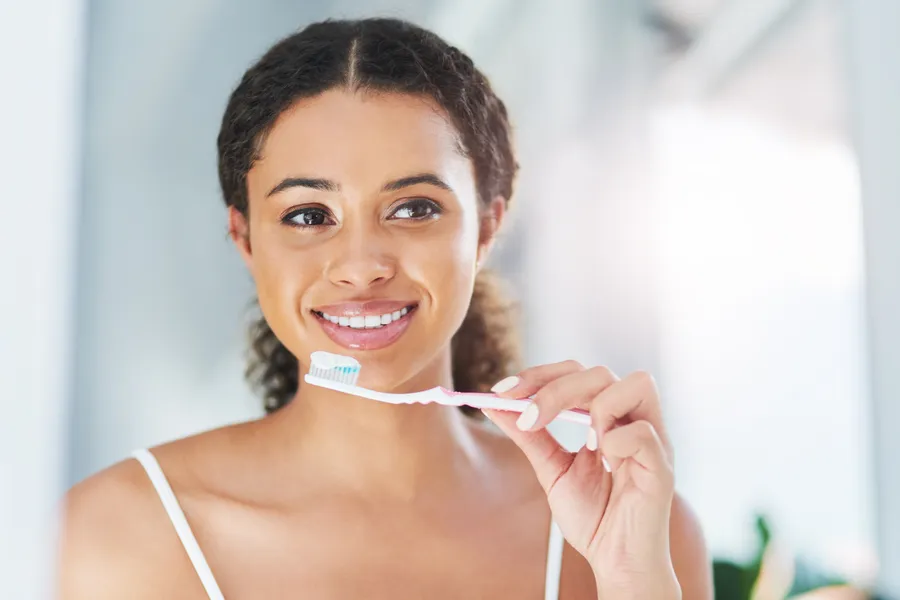
Babies and toddlers: From the first tooth, brush twice daily with a soft infant brush and a rice-sized smear of fluoride toothpaste. Sit your child on your lap facing away from you for better reach and a calmer experience.
Preschoolers: Move to a pea-sized amount of toothpaste around age three. Let your child take the first turn, then you take a turn to reach the back molars and gumline. Songs and timers turn two minutes from a battle into a game.
School-age kids: Most children can brush alone around age seven or eight, but spot-check the results. Look along the gumline and the chewing surfaces of the back teeth, where plaque loves to hide. Keep flossing together until their coordination catches up.
Making Flossing Less of a Fight
Flossing is the habit most likely to get skipped, for kids and adults alike. The fix is usually making it easier rather than more forceful. Floss picks slide between small teeth with one hand, which matters when you are flossing for a squirmy preschooler. Older kids often do better with picks too, at least until the habit is established.
Technique is simple: ease the floss between two teeth, curve it into a C shape against one tooth, and slide it gently up and down, going just below the gumline. Repeat on the neighboring tooth, then move on. Once a day, ideally before bed, is enough to make a real difference between the teeth where brushes cannot reach.

A Brushing Routine That Works
A simple sequence our team teaches families at checkups.
Set the stage
Pick a consistent time and place, a soft brush your child likes, and a two-minute song or timer. Predictability makes kids more cooperative.
Angle toward the gums
Hold the brush at a slight angle toward the gumline and use small, gentle circles. Scrubbing hard does not clean better and can bother tender gums.
Cover every surface
Brush the outside, inside, and chewing surfaces of every tooth, with extra attention on the back molars. Finish with a gentle swipe across the tongue.
Spit, do not rinse
Teach your child to spit out the extra toothpaste without rinsing with water, so a little protective fluoride stays on the teeth.
Parents finish up
Until kids have the dexterity, around age seven or eight, an adult takes a final pass. Let your child start so they build the skill and the habit.
Floss last
Once a day, clean between teeth that touch. With picks or string, what matters most is that it happens, every night is a great goal.
We Teach This at Every Visit
Hands-on demonstrations
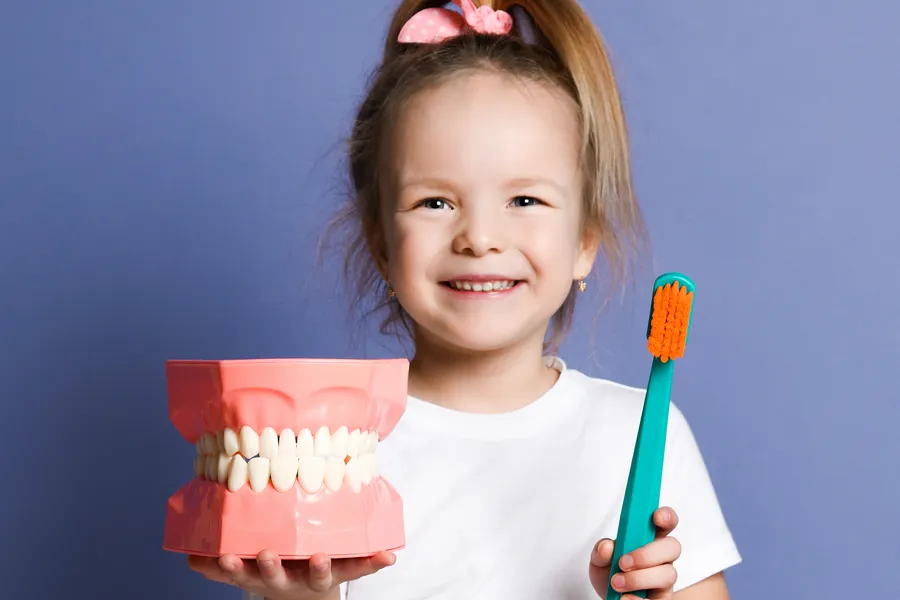
At checkups, we show kids proper technique on their own teeth, not a lecture. Kids remember what they practice.
We celebrate progress
Ask our team how the No Cavity Kids Club connects with regular checkups and home-care routines.
Tips for your child
Crowded teeth, braces, sensitive gums: we adjust our brushing and flossing advice to your child’s actual mouth and stage.
Every family is welcome
Children with special needs are always welcome in our Reunion office, and we will work with you on home-care strategies that fit your child.