
One Picture of the Whole Smile
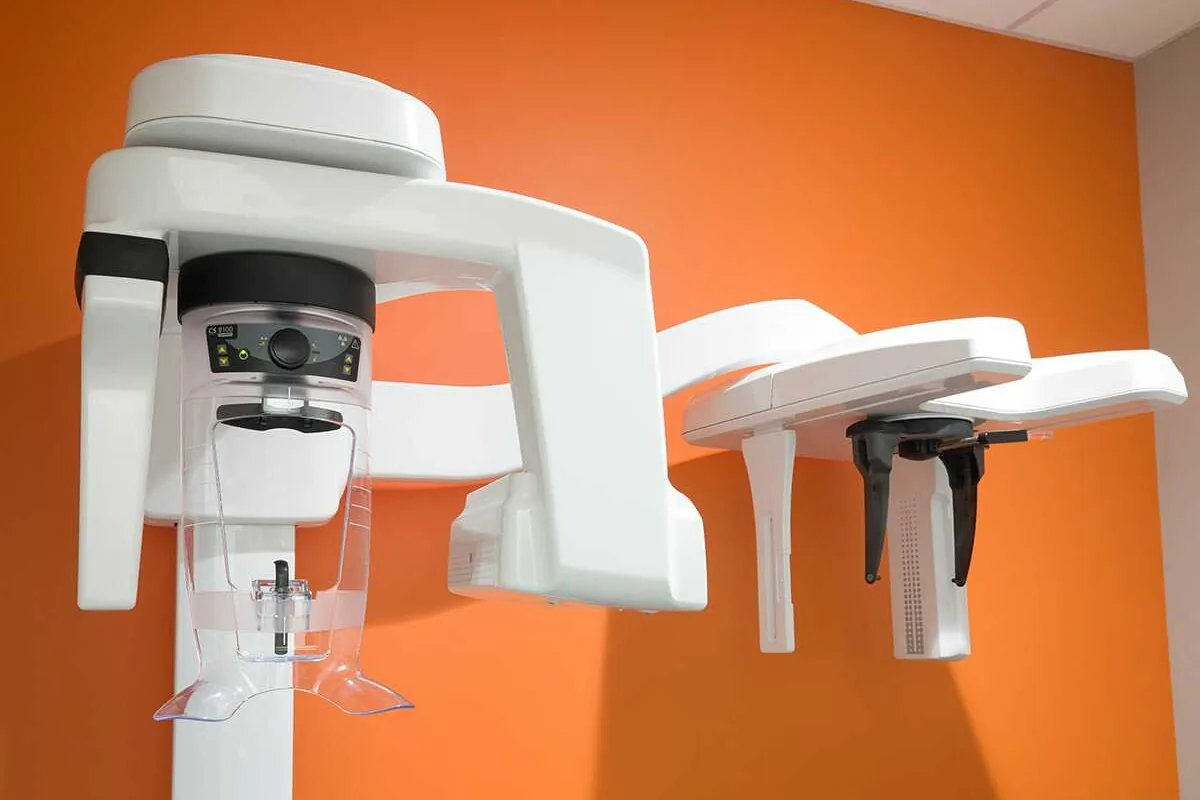
A panoramic X-ray captures your child's entire mouth in a single wide image: all the teeth, both jaws, and the areas where adult teeth are still developing. Instead of several small images, we get the full picture at once.
The process is easy for kids. Your child stands or sits still for a few seconds while the machine moves gently around their head. Nothing touches the inside of their mouth, which makes panoramic imaging a comfortable choice for children who find small mouth sensors tricky.
For our Reunion team, panoramic images are a window into your child's development. They help us see whether adult teeth are forming as expected, whether there is enough room for them, and whether anything needs closer attention as your child grows.
- One wide image of all teeth and jaws
- Nothing placed inside the mouth
- Finished in just a few seconds
- Helpful for tracking developing adult teeth
- Reviewed with you on screen
When a Full-Mouth Image Is Useful
A panoramic X-ray answers a different question from a small digital dental image. It can show the full mouth, both jaws, developing adult teeth, and the broad relationship between structures. That overview may help when the dentist is watching development, planning orthodontic care, or evaluating a concern that cannot be understood from one tooth alone.
Not every child needs a panoramic image at every visit. We consider age, dental history, symptoms, the stage of tooth development, and what the exam shows. If an image is recommended, ask what the team is looking for and how the result will affect the plan. We want families to understand the reason before the image is taken.
The process is usually quick and does not require a sensor inside the mouth. We help your child find a stable position, practice staying still, and explain that the unit moves around the head while the picture is captured. Afterward, we review the image with you and explain whether any follow-up is needed.

Panoramic Imaging and the Developing Smile
The team reviews the image with the rest of the exam rather than reading it in isolation. We may see developing adult teeth, a missing or extra tooth, the position of a tooth that has not erupted, or a reason to monitor a particular area as your child grows.
If the image raises a question, we explain what it means and what follow-up makes sense. Sometimes the next step is simply watching the area at regular checkups. Other times, the dentist may recommend a focused image, orthodontic consultation, or treatment plan.
If your child is nervous about standing still, tell us ahead of time so we can prepare the visit calmly. A child does not need to know every technical detail to have a successful image. We use simple language, demonstrate the position, and give your child a chance to ask for a pause.

How a Panoramic X-Ray Works
Step up to the machine
Your child stands or sits comfortably while we help them find the right position.
Hold still for a few seconds
The machine travels slowly around your child’s head while capturing the image. It is quiet, quick, and does not touch them.
See the big picture
The wide image appears on screen, and we go through it with you in plain language.